


Permanent Dental Implants
Permanent dental implants are titanium posts placed in your jawbone to replace missing tooth roots, with fixed teeth attached on top. They stay in place, so you can eat, speak and smile without removing them. At Dental Comfort Zone in Patna, options include single-tooth implants, All-on-4, All-on-6, full-mouth, zygomatic and pterygoid implants, planned with CBCT scans by Dr. Rohit Singh (FICOI, 18+ years). Cost depends on your case and is explained after a scan. Missing teeth, loose dentures or teeth that cannot be saved can make eating and smiling hard. Permanent dental implants give you fixed teeth that function like natural ones. This page explains what they are, which type may suit you, how the procedure works, what affects the cost, and how long they last.
Book Appointment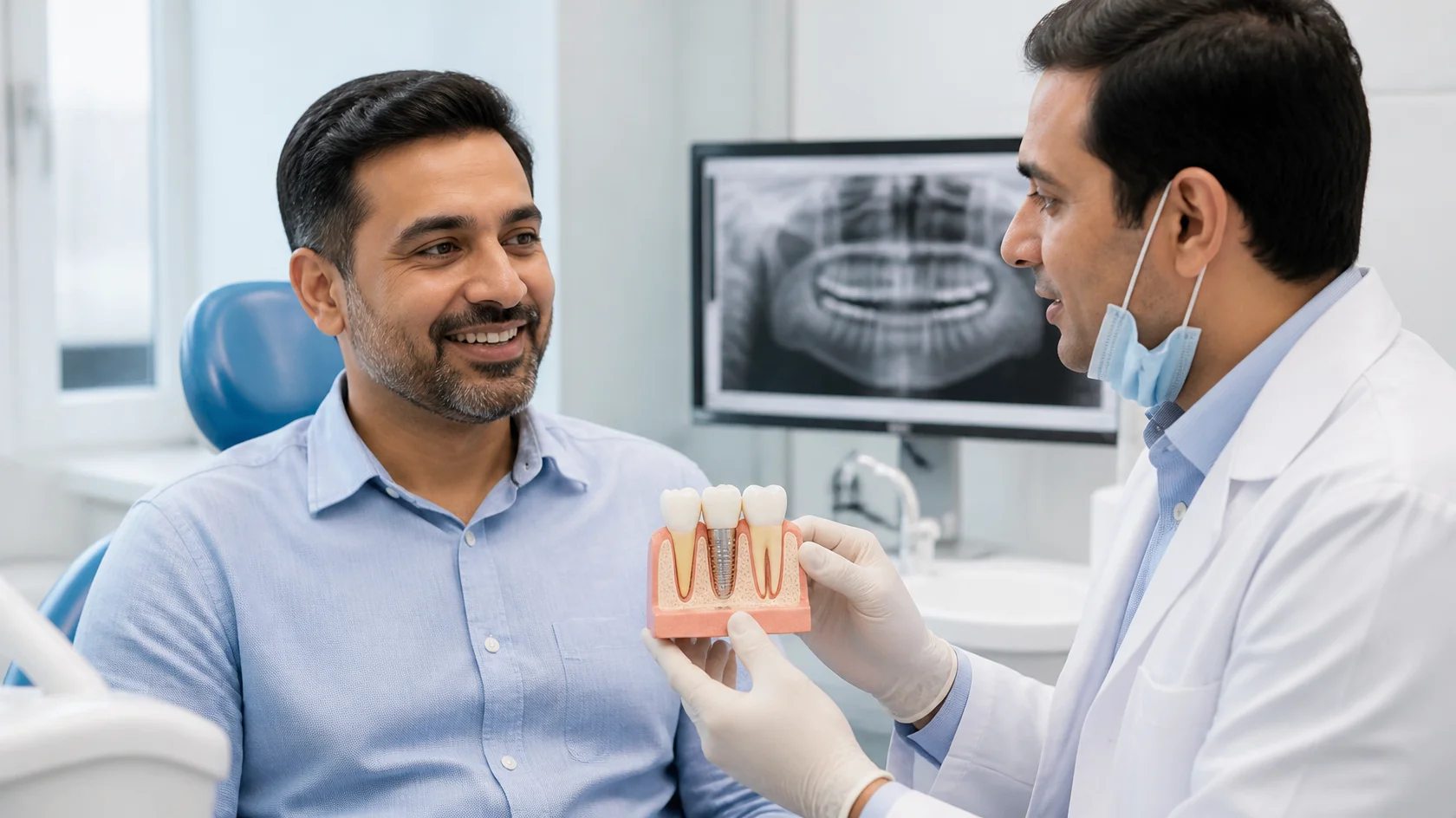
Permanent Dental Implants at a Glance
|
Question |
Answer |
|
What are they? |
Titanium implants in the jawbone supporting fixed teeth |
|
Replaces |
One tooth, several teeth or a full arch |
|
Types we offer |
Single, multiple, All-on-4, All-on-6, full-mouth, zygomatic, pterygoid |
|
Healing time |
Usually 3–6 months before final teeth |
|
Temporary teeth |
Fixed temporary teeth in suitable cases |
|
Planning |
CBCT scan and digital planning |
|
Implant specialist |
Dr. Rohit Singh, FICOI, 18+ years |
|
Cost |
Depends on the case, explained after a scan |
|
Clinic location |
Boring Patliputra Road, Patna, Bihar 800013 |
What Are Permanent Dental Implants?
A dental implant is a small titanium post placed in the jawbone. Over a few months, the bone grows around it and holds it firmly, like a natural tooth root. A crown, a bridge or a full set of teeth is then fixed on top. People often call this "permanent" because, unlike dentures, the teeth stay in your mouth. The implant can last many years, but the teeth on top may need repair over time, so no dental treatment is literally permanent. See our main dental implants page for an overview of all options.
Which Type of Permanent Implant Do You Need?
|
Your situation |
Option |
Notes |
|
One missing tooth |
Single-tooth implant |
Does not need support from neighbouring teeth |
|
Several missing teeth |
Multiple implants or an implant bridge |
Fewer implants than teeth in some cases |
|
All teeth missing or failing in one jaw |
All-on-4 or All-on-6 |
A fixed full set on four or six implants |
|
All teeth missing in both jaws |
Full-mouth implants |
|
|
Severe bone loss in the upper jaw |
Zygomatic implants |
Anchored in the cheekbone, in selected cases |
|
Weak bone at the back of the upper jaw |
Pterygoid implants |
Anchored in a stronger area behind the jaw, in selected cases |
|
Not enough bone |
Bone graft or sinus lift first |
Rebuilds bone before implants |
Your dentist recommends an option after an examination and a CBCT scan.
How Are Permanent Implants Different From Dentures and Bridges?
|
Dental implant |
Bridge |
Removable denture |
|
|
Fixed in the mouth |
Yes |
Yes |
No |
|
Needs neighbouring teeth ground down |
No |
Yes |
No |
|
Protects the jawbone |
Yes |
No |
No |
|
Surgery needed |
Yes |
No |
No |
|
Chewing strength |
Close to natural |
Good |
Reduced |
|
Cost |
Higher at first |
Medium |
Lowest |
See crowns and bridges if you are comparing a bridge.
Who Is a Good Candidate?
You may be suitable if you have missing teeth or teeth that cannot be saved, healthy gums or gum disease that has been treated, and enough jawbone, or are willing to have it rebuilt first. Smoking, poorly controlled diabetes and untreated gum disease raise the risk of failure, but many can be improved before surgery. See dental implants for diabetics and gum treatment.
How Is the Procedure Done?
-
Consultation and examination: your history, teeth, gums and goals.
-
CBCT scan and digital planning: a 3D view of bone, nerves and sinuses so each implant is placed precisely. See our CBCT technology and robotic dental implant technology.
-
Preparation: treating gum disease or infection, removing teeth that cannot be saved (tooth extraction), and bone grafting if needed.
-
Implant surgery: implants are placed under anaesthesia.
-
Temporary teeth: in suitable cases, fixed temporary teeth are fitted on the day or within about 48 hours.
-
Healing: usually 3 to 6 months while the implants fuse with the bone.
-
Final teeth: custom-made crowns, a bridge or a full set are fitted and adjusted to your bite.
-
Follow-up: regular check-ups and cleaning.
Timeline
|
Stage |
Approximate time |
|
Consultation and scan |
1–2 visits |
|
Surgery |
1 visit |
|
Temporary teeth (suitable cases) |
Same day to about 48 hours |
|
Healing |
3–6 months |
|
Final teeth |
1–3 visits |
What Are the Benefits?
-
Teeth that stay fixed and do not slip
-
Stronger chewing than dentures
-
Protects the jawbone and supports your face shape
-
No grinding of healthy neighbouring teeth
-
A natural look
-
A long-lasting solution when cared for
How Long Do Dental Implants Last?
Research on full-arch implants (All-on-4 and All-on-6) shows high survival. A 2026 meta-analysis of 55 studies found about 98% implant survival at five years or more, and a 2026 review reported good results but noted that biological and technical complications remain clinically relevant. Single implants also have a long track record. Your result depends on your bone, gums, habits and how well you clean around the implants. Studies describe groups of patients and are not guarantees.
What Are the Risks and Complications?
|
Risk |
What it means |
How we reduce it |
|
Infection or failure to fuse |
The implant does not bond with bone |
Planning, scans, hygiene, follow-up |
|
Gum or bone loss around the implant |
Called peri-implantitis |
Cleaning, treating gums first |
|
Damaged or worn teeth |
Crowns can chip or wear |
Night guard, strong materials, check-ups |
|
Nerve or sinus involvement |
Rare with careful planning |
CBCT scan and digital planning |
|
Swelling and bruising |
Normal after surgery |
Medicines and aftercare |
How Much Do Permanent Dental Implants Cost in Patna?
The cost depends on:
-
How many teeth you are replacing and whether it is one arch or both
-
The type of implant and the material of the teeth
-
Whether you need extractions, bone grafting or a sinus lift
-
The scans and digital planning
-
The number of visits and follow-ups
|
Dental Implant Treatment |
Unit |
Price (₹) |
|---|---|---|
|
Single Dental Implant |
Per Implant |
₹30,000 |
|
Implant + Crown |
Per Tooth |
₹35,000–₹40,000 |
|
All-on-4 Dental Implants |
Per Arch |
₹1,20,000 |
|
Implant Removal |
Per Implant |
₹4,000 |
|
Temporary Implant Crown |
Per Crown |
₹2,000 |
We scan your jaw first, then provide a written estimate for each option before treatment begins. Ask what is included in your dental implant cost, such as the scan, temporary teeth, final teeth, and follow-up appointments.
How Do You Look After Dental Implants?
-
Brush twice a day and clean between and under the teeth daily
-
Use a water flosser or interdental brush for bridges and full-arch teeth
-
Do not smoke or chew tobacco
-
Wear a night guard if you grind your teeth
-
Visit your dentist for check-ups and professional cleaning, often every three to six months. See teeth scaling and cleaning.
Permanent Dental Implants: Myths and Facts
|
Myth |
Fact |
|
Implants are truly permanent |
They can last many years, but the teeth on top may need repair. |
|
Implant surgery is very painful |
It is done under anaesthesia, with soreness for a few days. |
|
Anyone can have implants |
Bone, gums, smoking and health all matter. |
|
Implants are rejected like an organ |
Failures come from infection or poor bone fusion. |
|
You do not need check-ups |
Regular care is essential. |
Where Is Our Clinic in Patna?
Dental Comfort Zone is at C-101, Planco Shanti Awas, Boring Patliputra Road, opposite Suraksha Path Kamini Center, Patna, Bihar 800013. We are open Monday to Saturday, 10:00 am to 8:00 pm, and Sunday, 10:00 am to 2:00 pm. Call or WhatsApp +91 62008 24485, or contact us to book. More answers are in our FAQs.
Related Reading
Why Choose Us

Why Choose Dental Comfort Zone for Permanent Dental Implants in Patna?
-
An experienced implant specialist. Dr. Rohit Singh is a Fellow of the International Congress of Oral Implantologists (FICOI, USA) with 18+ years of experience, including complex cases.
-
A full range of options, from single implants to All-on-4, All-on-6, zygomatic and pterygoid implants, so you are not forced into one plan.
-
Careful planning with CBCT scans and digital planning.
-
Honest advice. We tell you when implants are not the right option.
-
Proof you can check: read our customer reviews, take the clinic tour and see our credibility page.
Ready To Transform Your Smile With Expert Dental Care?
Book your appointment today and experience advanced cosmetic dentistry treatments designed to give you a healthy and confident smile.