



Mouth Ulcers
A mouth ulcer is a painful sore on the inside of the mouth, on the tongue, cheek, lip or gums. Most heal on their own within one to two weeks. At Dental Comfort Zone in Patna, we examine the ulcer, look for sharp teeth, rough fillings or braces that may be causing it, ease the pain, and investigate any ulcer that has not healed within two weeks or keeps coming back. The cost depends on the cause and is explained before treatment. A small ulcer can make eating, drinking and talking uncomfortable. Most are harmless, but a sore that is unusually large, keeps returning or does not heal needs a proper check. This page explains the causes, how to tell a mouth ulcer from a cold sore, warning signs, home care and what we do at the clinic.
Book Appointment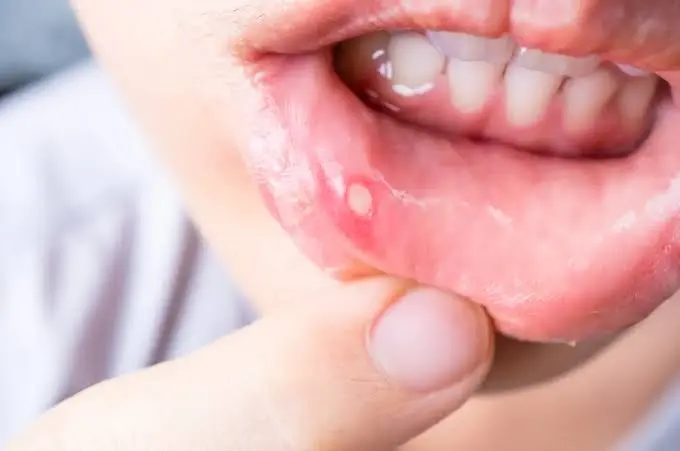
Services
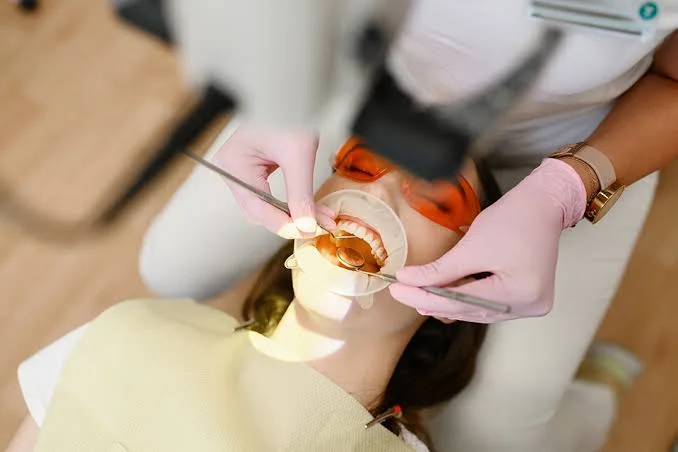
Mouth Ulcer Examination
A detailed look at the ulcer and surrounding tissue to understand its size, location, and possible cause before treatment begins.
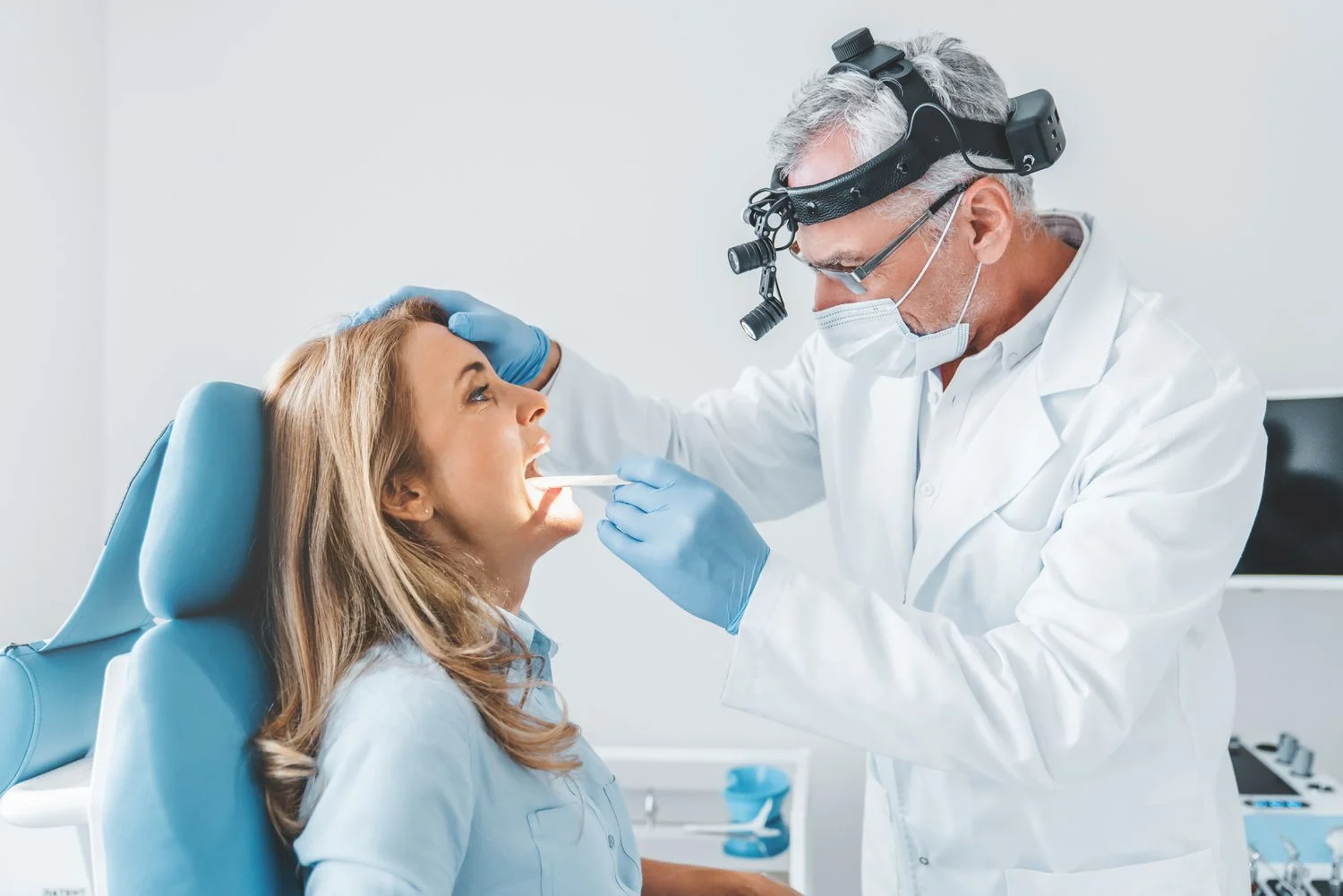
Cause Identification
Checking for sharp teeth, rough fillings, ill-fitting dentures, braces, or accidental biting that may be triggering the ulcer.
Pain Relief Treatment
Topical medication or prescribed treatment to ease discomfort and support faster healing.
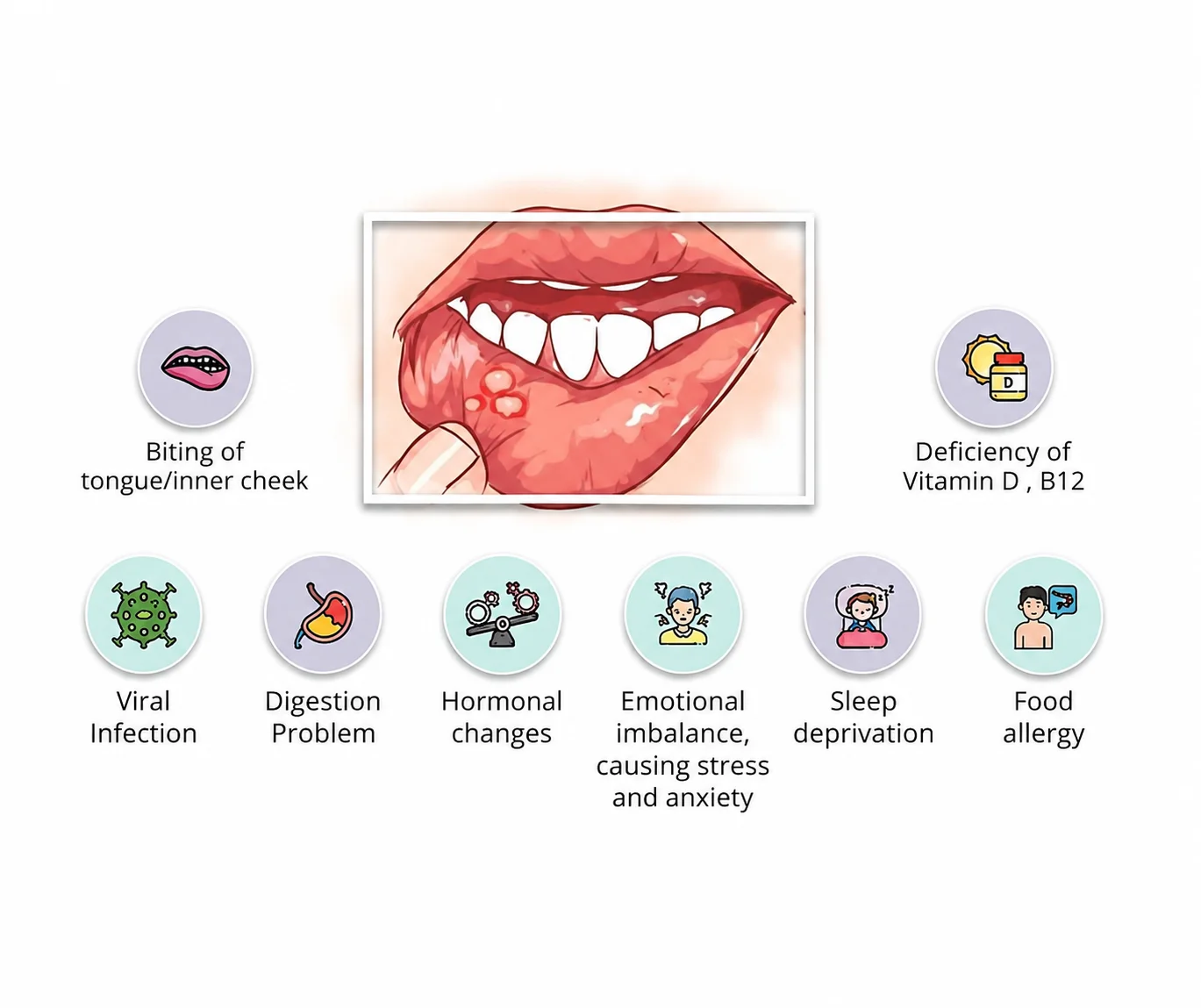
Recurring Ulcer Management
For patients who keep getting ulcers, identifying possible triggers and deciding if further evaluation is needed.
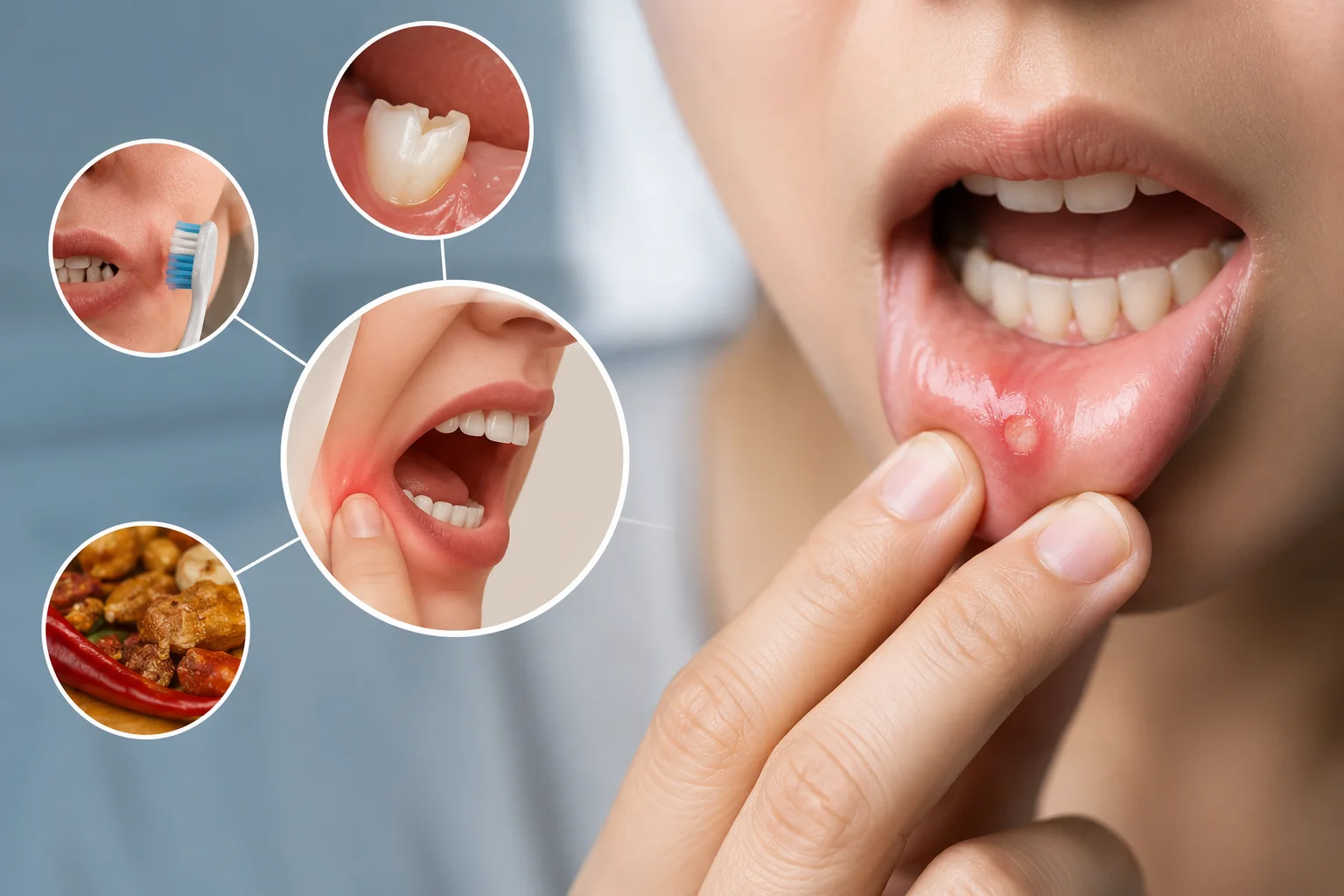
Correcting the Source of Irritation
Fixing a sharp tooth, rough filling, or ill-fitting appliance that's repeatedly causing the same ulcer to return.
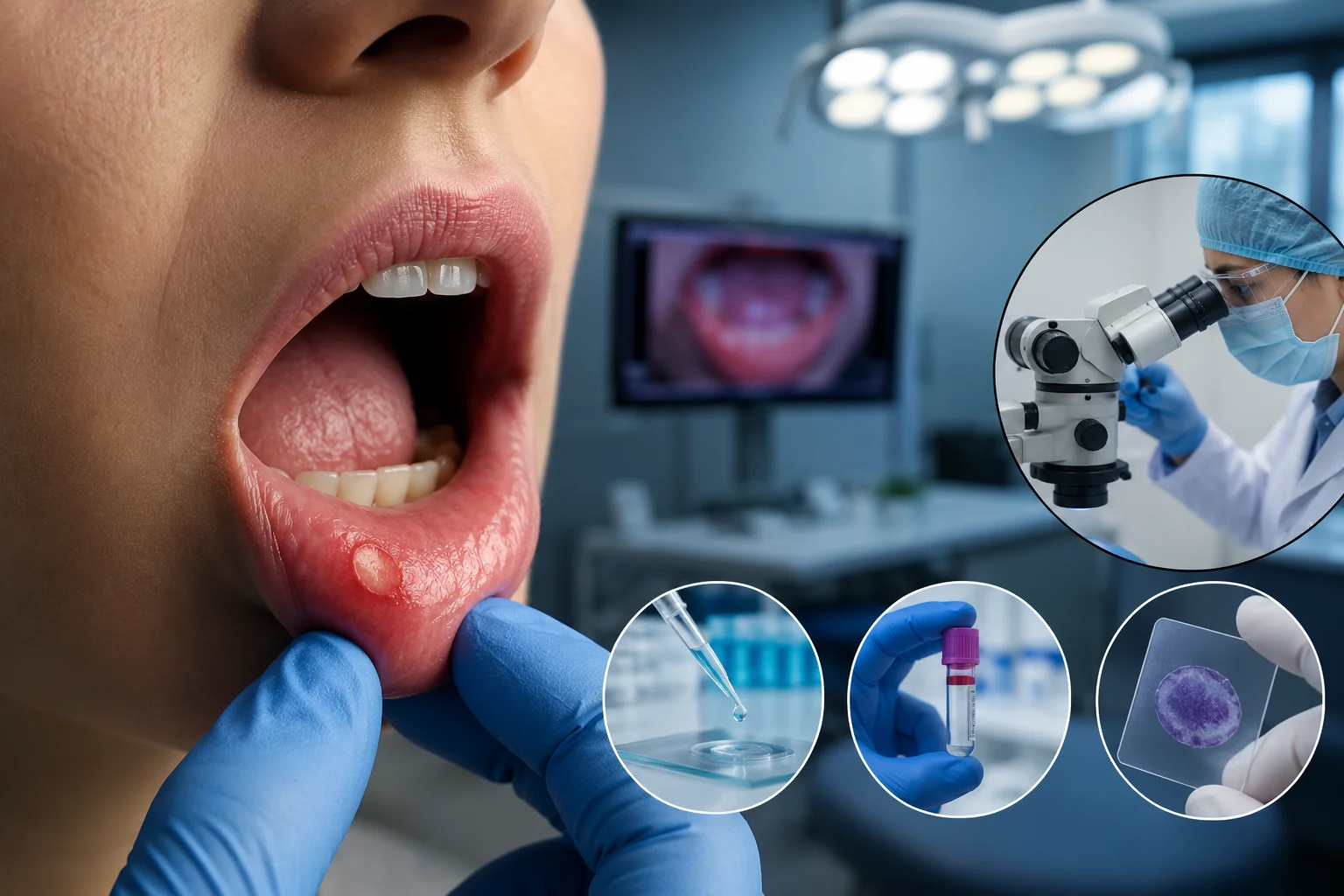
Further Investigation
For ulcers that don't heal, look unusual, or persist longer than expected, further tests or a specialist referral when needed.
Mouth Ulcer Treatment at a Glance
|
Detail |
Information |
|
What it is |
A painful sore inside the mouth |
|
Usual healing time |
1–2 weeks for most ulcers |
|
See a dentist if |
Ulcer lasts over 2 weeks, keeps returning, is very painful or looks unusual |
|
Treatments |
Pain relief, correcting the irritation source, medication, further evaluation |
|
Common causes |
Biting, sharp teeth, rough fillings, braces, dentures, stress, nutrient gaps |
|
Cost |
Depends on the cause. Explained before treatment |
|
Clinic location |
Boring Patliputra Road, Patna, Bihar 800013 |
|
Hours |
Mon–Sat 10:00 am–8:00 pm, Sun 10:00 am–2:00 pm |
What Are Mouth Ulcers?
Mouth ulcers (मुँह के छाले) are small, painful sores that form on the soft tissues inside the mouth. They can appear on the tongue, inner cheeks, lips, gums or the roof and floor of the mouth. Most are not serious and are not contagious. They are usually caused by minor injury or irritation and heal by themselves. An ulcer that does not heal needs examination.
Types of Mouth Ulcers
|
Type |
What it looks like |
Usual healing time |
|
Minor ulcer |
Small, round or oval, white or yellow centre with a red edge |
1–2 weeks |
|
Major ulcer |
Larger and deeper, more painful |
Several weeks, may leave a scar |
|
Cluster of tiny ulcers |
Many small sores together |
1–2 weeks |
|
Traumatic ulcer |
Caused by a bite, burn or a sharp tooth or appliance |
Heals once the cause is removed |
Mouth Ulcer or Cold Sore?
|
Mouth ulcer |
Cold sore |
|
|
Location |
Inside the mouth |
Usually on or around the lips |
|
Appearance |
Flat sore with a pale centre |
Fluid-filled blisters that crust |
|
Cause |
Irritation, stress, nutrient gaps and other factors |
Herpes simplex virus |
|
Contagious |
No |
Yes |
What Causes Mouth Ulcers?
|
Cause |
Examples |
What helps |
|
Local injury |
Cheek or tongue bite, hot food |
Time, gentle care |
|
Sharp or broken tooth |
Chipped tooth, rough edge |
Smoothing or restoring the tooth. See general dentistry |
|
Rough or high filling or crown |
Poorly shaped restoration |
Adjusting it. See crowns and bridges |
|
Braces or dentures |
Wire or edge rubbing the cheek |
Adjustment or wax. See orthodontic treatment |
|
Stress, hormones, certain foods |
Acidic or spicy foods |
Avoiding triggers |
|
Nutrient gaps |
Low iron, vitamin B12 or folate |
Blood tests and medical advice |
|
Underlying health conditions |
Digestive or immune conditions |
Medical evaluation |
|
Infection |
Gum boil from an infected tooth |
Treat the tooth. See toothache treatment |
When Should You Get a Mouth Ulcer Checked?
See a dentist if you have:
-
An ulcer that has not healed within two weeks
-
Ulcers that keep coming back
-
A very large or very painful sore
-
Trouble eating, drinking or talking
-
An ulcer that keeps returning in the same spot, near a sharp tooth, filling, brace or denture
-
Several ulcers at once, or ulcers with fever
Warning signs that need prompt attention: a sore that does not heal, a red or white patch, a lump or thickening, unexplained bleeding, numbness, difficulty swallowing, or loose teeth without a clear cause. These can occasionally be early signs of oral cancer. The risk is higher with tobacco, gutka, paan or betel quid use. See our oral cancer treatment page. Early checks make a big difference.
Mouth Ulcer Treatments We Offer
|
Treatment |
What it does |
|
Ulcer examination |
Checks size, location, appearance and surrounding tissue |
|
Cause identification |
Looks for sharp teeth, rough fillings, braces, dentures or biting habits |
|
Pain relief treatment |
Topical medication or prescribed treatment to ease discomfort and support healing |
|
Correcting the source of irritation |
Smoothing or repairing the tooth, filling or appliance that keeps causing the ulcer |
|
Recurring ulcer management |
Identifies triggers and decides whether further tests are needed |
|
Further evaluation |
Tests or specialist referral for ulcers that do not heal or look unusual |
How Are Mouth Ulcers Diagnosed?
Diagnosis begins with an examination and a conversation about your symptoms: when the ulcer appeared, how long it has lasted, how often you get them and what seems to trigger them. Your dentist checks the tongue, gums, cheeks, lips, palate, teeth, fillings and any braces or dentures. An X-ray may be advised if a tooth is suspected. If an ulcer does not heal as expected, your dentist may advise further tests or refer you to a specialist.
What Happens During Your Visit?
-
Consultation: we ask about your symptoms, health history and any medicines you take.
-
Oral examination: the ulcer and nearby tissues, teeth and appliances are checked.
-
Finding the cause: we look for irritants such as a sharp tooth or rough filling.
-
Treatment plan: based on the ulcer’s size, location, duration and likely cause.
-
Treatment: pain relief, medication and correcting the source of irritation.
-
Follow-up: if the ulcer has not improved, we review it and advise next steps.
How to Ease a Mouth Ulcer at Home
These steps help comfort and healing. They do not cure an ulcer.
-
Rinse gently with warm salt water
-
Brush gently with a soft toothbrush
-
Avoid spicy, salty, acidic and very hot foods
-
Drink plenty of water
-
Do not pick, touch or bite the ulcer
-
Avoid tobacco, gutka and paan
-
Use any gel or medicine exactly as directed on the label or by your dentist
-
Do not place aspirin directly on the ulcer
How Long Does a Mouth Ulcer Take to Heal?
|
Situation |
Typical time |
What to do |
|
Minor ulcer |
1–2 weeks |
Home care |
|
Major ulcer |
Several weeks |
See a dentist |
|
Ulcer from a sharp tooth or appliance |
Heals only when the cause is fixed |
See a dentist |
|
Any ulcer lasting over 2 weeks |
Not expected |
Get it examined |
How to Prevent Mouth Ulcers
-
Brush twice a day gently and clean between teeth daily
-
Avoid foods that trigger ulcers for you
-
Eat a balanced diet with enough iron, B12 and folate
-
Have sharp teeth, rough fillings and sore-causing appliances adjusted
-
Manage stress and sleep
-
Visit your dentist regularly. See teeth scaling and cleaning
Mouth Ulcers in Children
Children also get mouth ulcers, often from biting, rough toys or viral infections. Call us or see a doctor if your child has several ulcers, fever, trouble drinking or an ulcer that does not heal. See pediatric dentistry.
How Much Does Mouth Ulcer Treatment Cost in Patna?
The cost depends on the cause and the care needed. Many ulcers need only an examination and a prescription. Correcting a sharp tooth or a rough filling, repeated visits for recurring ulcers, or further tests and referrals can add to the cost. Your dentist examines the ulcer and explains the plan and cost before any treatment begins. Call +91 62008 24485 or contact us for details.
Where Is Our Mouth Ulcer Clinic in Patna?
Dental Comfort Zone is at C-101, Planco Shanti Awas, Boring Patliputra Road, opposite Suraksha Path Kamini Center, Patna, Bihar 800013. We are open Monday to Saturday, 10:00 am to 8:00 pm, and Sunday, 10:00 am to 2:00 pm. Call +91 62008 24485 or contact us to book. More answers are in our FAQs.
Need Relief From a Mouth Ulcer?
Call +91 62008 24485 or WhatsApp us to book a visit. Don’t wait if a sore has not healed in two weeks.
Why Choose Us

Why Choose Dental Comfort Zone for Mouth Ulcer Treatment in Patna?
A mouth ulcer can make eating and talking uncomfortable. At Dental Comfort Zone, we find what's actually causing it, not just treat the pain. With 12+ years of experience and 15,000+ happy patients, we help it heal for good.
-
Thorough examination: we check the ulcer, nearby tissues, teeth and appliances.
-
Cause-focused care: we treat the source, not just the pain.
-
Gentle treatment: comfortable care for a painful area.
-
Careful follow-up: unusual, persistent or recurring ulcers are investigated and referred when needed.
-
Complete care under one roof: from general dentistry to braces, crowns and gum care.
-
Proof you can check: read our customer reviews, take the clinic tour and see our credibility page. Meet our dental team.
Ready To Transform Your Smile With Expert Dental Care?
Book your appointment today and experience advanced cosmetic dentistry treatments designed to give you a healthy and confident smile.