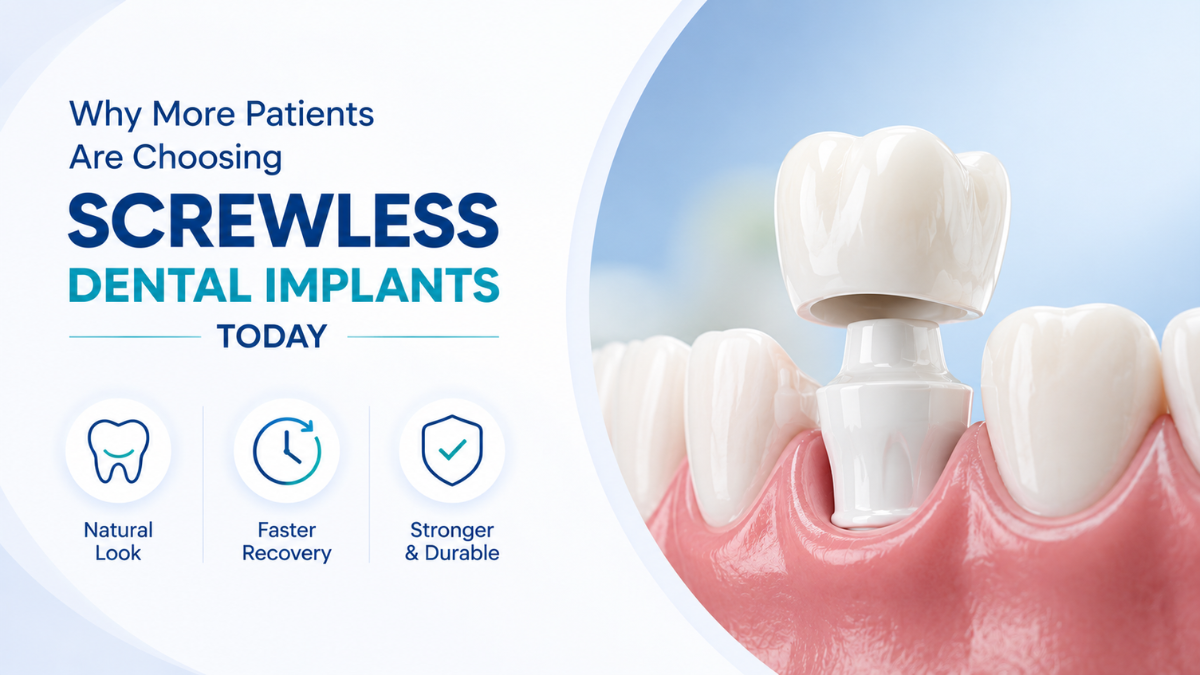
When I first started recommending screwless dental implants, many patients had the same concern: Will it hurt? That fear is completely normal. I’ve guided hundreds of people through this treatment, and I understand how confusing and emotional dental implant decisions can feel.
Today, I’ll explain everything honestly. I’ll cover pain levels, healing, recovery, misconceptions, and what to expect if you choose a screwless tooth implant. My goal is simple: help you feel informed, calm, and confident.
What Are Screwless Dental Implants?
Screwless dental implants are modern implant systems designed without visible screws connecting the crown to the implant post. Instead, they use friction-fit, locking, or cementless connections. This approach creates a cleaner structure and reduces mechanical complications seen in traditional designs.
You may also hear them called:
- Cementless dental implants
- Screwless implant system
- Metal free dental implants
- Metal free zirconia dental implants
In clinical practice, screwless dental implants often provide better aesthetics and fewer long-term maintenance issues.
Many patients ask if a screwless tooth implant feels different from traditional implants. The answer is no in daily function, but yes in comfort and maintenance. These systems often reduce irritation and mechanical stress.
Screwless Dental Implants Procedure
The screwless dental implants procedure follows established implant dentistry protocols.
Step 1: Consultation and Planning
I begin with X-rays or CBCT scans to evaluate bone health. This step ensures screwless dental implants are safe and appropriate.
Step 2: Implant Placement
I place the implant post into the jawbone under local anesthesia. Patients typically feel pressure, not pain.
Step 3: Healing Phase (Osseointegration)
The bone bonds naturally with the implant over several weeks or months.
Step 4: Crown Placement
Instead of screws, I attach the crown using a precision locking or cementless system. This completes the screwless tooth implant restoration.
What’s Normal and What’s Not
Let me reassure you. Some discomfort is normal, but severe pain is not.
Normal discomfort (First 3–5 days)
You may feel:
- Mild soreness
- Jaw stiffness
- Slight swelling
This happens because your body starts healing. According to the American Dental Association and NHS, mild inflammation after implant placement is a natural healing response.
When I place screwless dental implants, many patients report less irritation compared to screw-retained designs.
Moderate pain (First 1–2 weeks)
This may indicate:
- Tissue inflammation
- Bite pressure imbalance
A properly placed screwless tooth implant usually improves quickly.
Severe or worsening pain (Not normal)
This may signal:
- Infection
- Implant overload
- Nerve irritation
If pain increases after day 5, you must see your dentist immediately.
What Your Pain May Be Telling You
I always ask patients exactly where they feel pain.
Pain in the gum:
Usually normal healing inflammation.
Pain deep in the jawbone:
May indicate implant stress or bone integration issues.
Sharp nerve-like pain:
Requires immediate evaluation.
Pain while chewing:
Could indicate bite imbalance or crown pressure.
With properly placed screwless dental implants, persistent severe pain is uncommon.
What To Do and What NOT To Do After Screwless Dental Implants
What To Do
- Take prescribed medications
- Use a cold compress during the first 24 hours
- Eat soft foods
- Maintain oral hygiene gently
- Follow your dentist’s instructions strictly
Proper care helps your screwless tooth implant heal faster.
What NOT To Do
- Do not smoke
- Do not chew hard foods early
- Do not skip follow-ups
- Do not ignore unusual pain
These mistakes increase complications even with advanced screwless dental implants.
You Are Not Alone in This Experience
I understand how frustrating implant pain can feel. Many patients worry they made the wrong decision. Let me reassure you. Healing takes time, and temporary discomfort does not mean failure.