



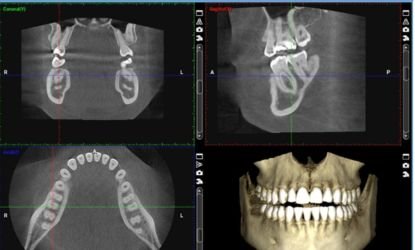
 3D Reconstruction
3D Jawbone Imaging
View the jawbone and surrounding structures in three dimensions for case-specific dental assessment and planning.
At Dental Comfort Zone, Patna, modern dental imaging can help clinicians understand complex tooth, jaw and surrounding anatomical structures in three dimensions. Cone Beam Computed Tomography (CBCT) provides detailed 3D images when conventional dental X-rays do not provide sufficient information for a particular clinical question.
Our dental team uses clinical examination and appropriate diagnostic imaging to support individualized treatment planning for dental implants, impacted teeth and selected complex dental conditions.
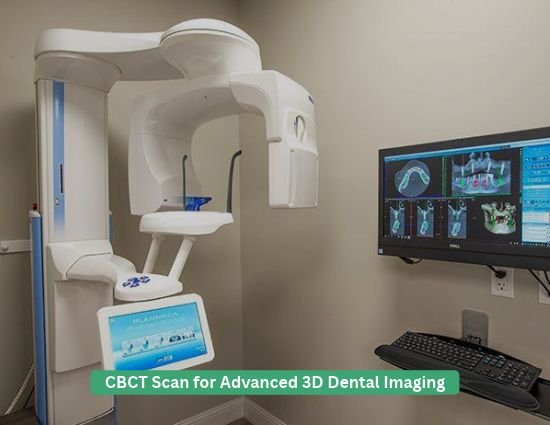
CBCT stands for Cone Beam Computed Tomography. It is an advanced imaging technique that produces three-dimensional views of selected areas of the teeth, jawbones and nearby anatomical structures.
Unlike conventional two-dimensional dental X-rays, CBCT imaging can help qualified dental professionals assess anatomical relationships from different angles. This additional information may be valuable when planning certain treatments or investigating complex dental problems.
A CBCT scan is not necessary for every dental patient. The dentist recommends it when the expected diagnostic benefit justifies the radiation exposure.
Discover how Cone Beam Computed Tomography (CBCT) provides detailed three-dimensional views of teeth, jawbones and surrounding anatomical structures to support diagnosis and personalized dental treatment planning.
3D Reconstruction
View the jawbone and surrounding structures in three dimensions for case-specific dental assessment and planning.
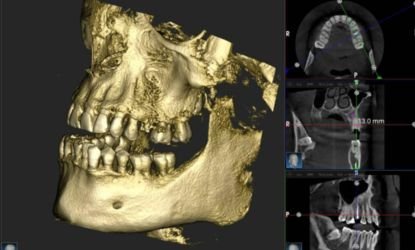 Cross-Sectional Views
Examine bone dimensions and anatomical relationships when clinically indicated for dental implant treatment planning.
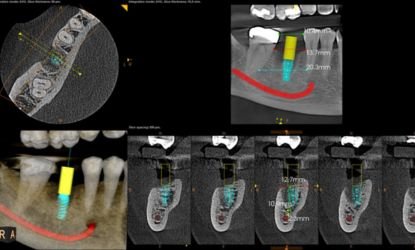 Multiplanar Imaging
Review axial, coronal and sagittal views to help evaluate selected dental conditions and complex cases.
Clinical note: CBCT imaging is recommended when justified by individual clinical needs. Your dentist will determine whether this examination is appropriate for you.
Learn more about CBCT scans, explained by our advanced implantologist, Dr. Rohit Singh, and understand their role in accurate diagnosis and personalized dental treatment planning.
At Dental Comfort Zone, Patna, advanced imaging technology can support detailed dental assessment when clinically indicated. CBCT creates three-dimensional views of selected teeth, jawbones and surrounding structures.
Examine relevant dental anatomy from multiple angles.
Support appropriate implant and complex dental treatment planning.
Help explain relevant anatomical findings and treatment options.
When clinically indicated, CBCT imaging can provide useful anatomical information that supports diagnosis and treatment planning for selected dental conditions.
View selected teeth, jawbones and nearby structures in three dimensions to better understand their anatomical relationships.
Assess bone dimensions and the location of important anatomical structures when planning suitable dental implant procedures.
Help evaluate selected impacted teeth, unusual tooth positions and complex root anatomy when additional imaging is justified.
Provide cross-sectional information about selected areas of the jaw when assessing bone anatomy for appropriate treatment planning.
Offer additional information about selected complex root canal cases when conventional imaging and clinical findings are insufficient.
Help clinicians combine imaging findings with examination results, symptoms and medical history to plan appropriate care.
CBCT imaging is generally considered for specific diagnostic questions that cannot be answered adequately using clinical examination or lower-dose conventional imaging.
The dentist determines whether a scan is appropriate based on the patient's condition, the intended treatment and the information required.
Both imaging methods have a role in dentistry. The appropriate option depends on the diagnostic question.
| Feature | Conventional Dental X-ray | CBCT Scan |
|---|---|---|
| Image format | Primarily two-dimensional | Three-dimensional reconstruction |
| Typical use | Routine dental assessment and many common diagnostic needs | Selected cases requiring additional 3D anatomical information |
| Anatomical assessment | Structures may overlap in the image | Allows assessment from multiple reconstructed views |
| Radiation exposure | Generally lower, depending on the examination | Varies by machine, field of view and scan settings; often higher than a single conventional dental X-ray |
| When recommended | When it can answer the clinical question adequately | When the additional information is justified for patient care |
The actual radiation dose depends on the equipment, settings, field of view and examination protocol. CBCT should be prescribed only when clinically justified.
Dental Comfort Zone is a multi-specialty dental clinic in Patna, established in 2014 by Dr. Rohit Singh and Dr. Neha Singh. The clinic provides dental consultations and treatment planning for routine and complex oral health concerns.
Dr. Rohit Singh brings more than 18 years of professional experience in dentistry, with a focus on implant dentistry and complex rehabilitation. Dr. Neha Singh has experience in endodontics, cosmetic dentistry and smile designing.
Diagnostic imaging is considered as part of a broader clinical assessment. The choice of investigation and treatment depends on the individual patient's needs.
Dr. Rohit Singh Dr. Neha Singh
Your dentist will explain why imaging may be needed and how the findings could help guide your treatment.
Discuss your symptoms, dental history and treatment concerns with the dental team.
The dentist determines whether a CBCT scan or another investigation is appropriate.
The imaging findings are interpreted in conjunction with the clinical examination and relevant history.
Understand the recommended treatment options, benefits, limitations and next steps.
Speak with our dental team about your symptoms, treatment requirements and whether three-dimensional dental imaging may be appropriate for your case.
C-101, Planco Shanti Awas, Boring Patliputra Road, Patna, Bihar 800013.