



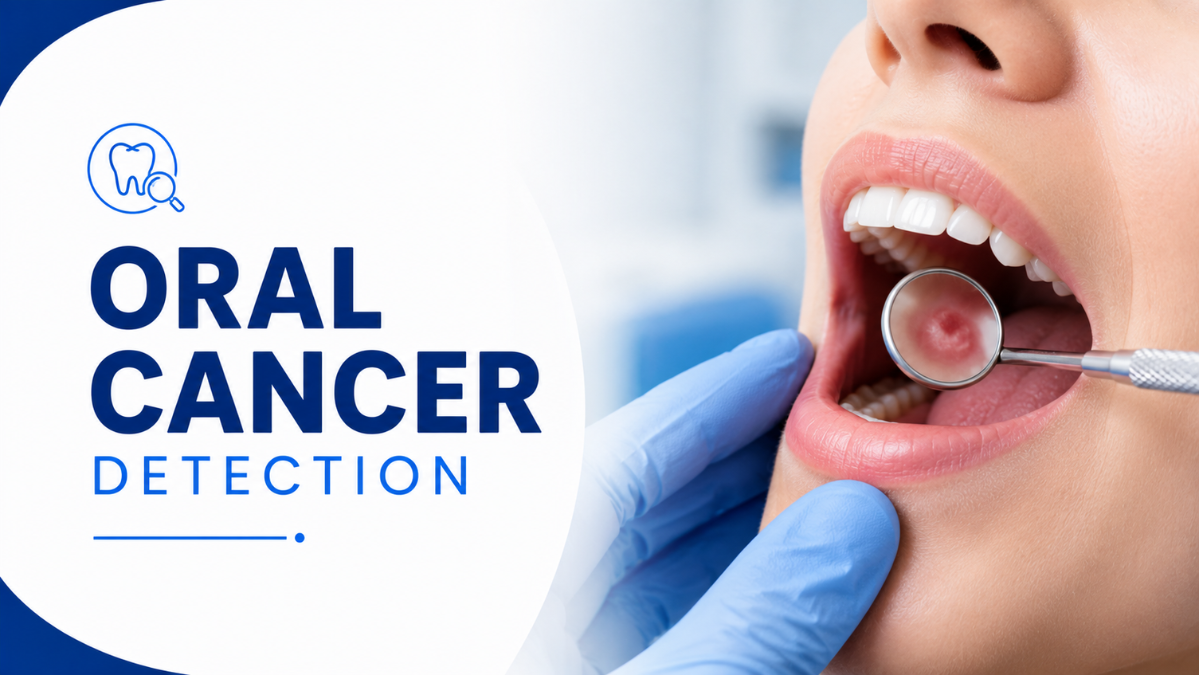
Get any mouth sore, white or red patch, or lump that does not go away within two weeks checked by a dentist or doctor. Do not wait for pain, because early oral cancer is often painless. Oral cancer is easiest to treat when found early, and oral cancer detection in Patna at Dental Comfort Zone starts with a quick, painless examination of your mouth and neck. If you chew gutka, khaini, zarda or paan with areca nut, smoke bidi or cigarettes, or drink alcohol regularly, ask your dentist about screening, which dentists commonly advise at least once a year.
Most mouth sores are harmless, and this guide is not meant to frighten you. But in India, many oral cancers are found late because people assume a sore will heal on its own. Knowing the signs, the risks and what a screening involves can help you act early.
Oral Cancer Detection at a Glance
|
Question |
Short answer |
|
Main warning sign |
A sore, patch or lump that lasts more than 2 weeks |
|
Is it painful early on? |
Often not, so do not wait for pain |
|
Biggest risk factors |
Gutka, khaini, zarda, paan with areca nut, bidi, cigarettes, alcohol |
|
How is it detected? |
Visual and hands-on examination of the mouth and neck, plus further tests if needed |
|
Does screening hurt? |
No. It usually takes a few minutes |
|
Who should be screened? |
Everyone at regular check-ups, and tobacco, areca nut and alcohol users especially |
|
Clinic location |
Boring Patliputra Road, Patna, Bihar 800013 |
|
Hours |
Mon–Sat 10:00 am–8:00 pm, Sun 10:00 am–2:00 pm |
What Is Oral Cancer?
Oral cancer starts in the lips, tongue, inner cheeks, gums, floor of the mouth or roof of the mouth. Cancers at the back of the throat (the oropharynx) are often grouped with it. Most oral cancers begin in the thin flat cells that line the mouth. It often starts as a small spot or sore that looks harmless, which is why people ignore it.
Why Oral Cancer Matters in Bihar and India
Oral cancer is one of the most common cancers in India, and research reviews place Bihar among the regions with higher rates. The main reason is the widespread use of chewed and smoked tobacco and areca nut. Late diagnosis is a major problem: many people see a doctor only when a sore has grown or started to hurt. Regular dental check-ups and a few minutes of checking your own mouth can catch problems earlier.
Risk Factors for Oral Cancer
|
Risk factor |
Why it matters |
|
Smokeless tobacco (gutka, khaini, zarda, snuff, pan masala with tobacco) |
Held against the cheek or gums for long periods; one of the leading causes in India |
|
Betel quid and areca nut |
Harmful even without tobacco; linked to precancerous changes |
|
Smoking (bidi, cigarettes, cigars, hookah) |
A major cause of mouth and throat cancer |
|
Alcohol |
Raises risk, especially together with tobacco |
|
HPV infection |
Linked mainly to cancers at the back of the throat. In India, tobacco is the bigger factor |
|
Sun exposure |
Can cause lip cancer. Use SPF lip balm outdoors |
|
Chronic irritation |
A sharp tooth or ill-fitting denture rubbing for a long time may contribute |
|
Low intake of fruits and vegetables |
Associated with higher risk |
Using several of these together, such as tobacco plus alcohol, raises the risk further.
Warning Signs of Oral Cancer
|
Sign |
What to do |
|
A sore or ulcer that does not heal within 2 weeks |
Get it checked |
|
A white patch (leukoplakia) |
Get it checked |
|
A red patch (erythroplakia) |
Get it checked promptly |
|
A lump or thickened area in the mouth, cheek or neck |
Get it checked |
|
Unexplained bleeding in the mouth |
Get it checked |
|
Numbness, burning or pain in one area |
Get it checked |
|
Difficulty chewing, swallowing or speaking |
See a doctor |
|
Reduced mouth opening or stiffness |
Get it checked, especially if you chew areca nut or paan |
|
A loose tooth with no clear cause, or an extraction socket that will not heal |
Get it checked |
|
Persistent hoarseness or sore throat |
See a doctor |
Most of these have harmless causes. But when they last more than two weeks, a professional check is the safe step.
Mouth Ulcer or Something More Serious?
|
Common mouth ulcer |
Sore to get checked |
|
|
Healing |
1–2 weeks |
Not healed after 2 weeks |
|
Pain |
Usually painful from the start |
Often painless early on |
|
Cause |
Often a bite, sharp tooth or irritation |
Often no clear cause |
|
Pattern |
Comes and goes |
Stays, grows or thickens |
If you are unsure, see mouth ulcer treatment for causes and care, and have any sore that lasts over two weeks examined.
How to Check Your Mouth at Home
A monthly self-check takes two minutes.
-
Stand in good light with a mirror.
-
Look at your lips and the inside of your lips and cheeks.
-
Check your gums and the roof of your mouth.
-
Stick out your tongue and look at the top, sides and underside.
-
Look at the floor of your mouth.
-
Feel your neck and under your jaw for lumps.
-
Note anything new, such as a patch, sore, lump or change in colour, and get it checked if it lasts more than two weeks.
A self-check does not replace a dentist’s examination.
What Happens During an Oral Cancer Screening?
Oral cancer screening is simple, quick and painless. It is often part of a routine dental check-up.
-
Questions: the dentist asks about symptoms, tobacco, areca nut, paan and alcohol use, and your medical history.
-
Visual examination: with a light and mirror, the dentist checks your lips, cheeks, gums, tongue and the floor and roof of your mouth.
-
Hands-on examination: the dentist gently feels your mouth, jaw and neck for lumps or tender areas.
-
Further tests if needed: if something looks suspicious, your dentist may advise a biopsy or imaging, or refer you to an oral surgeon or cancer specialist.
-
Plan: you receive clear advice on follow-up, prevention and quitting tobacco.
A dentist can spot warning signs, but only further tests, such as a biopsy, can confirm cancer.
How Often Should You Be Screened?
Everyone benefits from an oral examination at routine check-ups, usually every six months. If you use tobacco, areca nut or alcohol, or have had a patch or sore before, dentists commonly advise a screening at least once a year, and your dentist may suggest more frequent checks. If you notice any warning sign, do not wait for your next routine visit. See general dentistry and teeth scaling and cleaning for regular check-ups.
Why Early Detection Matters
Oral cancer found early is generally easier to treat, needs less extensive treatment and gives better outcomes than cancer found late. Precancerous changes, such as white or red patches, can often be monitored or treated before they become cancer. Regular examinations give your dentist the chance to notice changes you cannot see yourself.
How to Reduce Your Risk of Oral Cancer
-
Quit tobacco in all forms. This includes gutka, khaini, zarda, snuff and smoking. Ask your dentist or doctor about quitting support, including India’s National Tobacco Quitline.
-
Avoid areca nut and betel quid, even without tobacco.
-
Limit alcohol, and never combine it with tobacco.
-
Eat plenty of fruits and vegetables.
-
Protect your lips from the sun with SPF lip balm.
-
Keep your mouth healthy. Brush twice a day. See the best time to brush your teeth.
-
Fix sharp teeth and ill-fitting dentures. See crowns and bridges.
-
Ask your doctor about HPV vaccination.
-
Go for regular check-ups.
What to Do If You Are Worried
Do not panic: most mouth sores are not cancer. But do not wait either. Book an examination, and note when you first saw the change, whether it has grown, and whether it hurts. If you have bleeding that will not stop, or trouble breathing or swallowing, go to a hospital emergency room.
Why Choose Dental Comfort Zone for Oral Cancer Detection in Patna?
-
Careful examination: a thorough look at your lips, cheeks, tongue, gums, floor and roof of the mouth, and a feel of your jaw and neck.
-
Clear next steps: if something needs further testing, we explain what is needed and refer you to the right specialist.
-
Judgement-free advice on tobacco, paan and gutka, and help with quitting.
-
Complete dental care under one roof.
-
Proof you can check: learn about our oral cancer services, read our customer reviews and meet the full dental team.
Visit us: C-101, Planco Shanti Awas, Boring Patliputra Road, opposite Suraksha Path Kamini Center, Patna, Bihar 800013. Open Monday to Saturday, 10:00 am to 8:00 pm, and Sunday, 10:00 am to 2:00 pm. Call +91 62008 24485 or contact us.
Frequently Asked Questions
What are the early signs of oral cancer?
Early signs include a mouth ulcer that does not heal in two weeks, a white or red patch, a lump or thickening, unexplained bleeding, numbness or burning, difficulty swallowing, and reduced mouth opening. Most have harmless causes, but any sign lasting over two weeks should be examined.
Is oral cancer painful in the early stage?
Often not. Early oral cancer is frequently painless, unlike many common mouth ulcers, which hurt from the start. That is why you should not wait for pain. A sore, patch or lump that persists for more than two weeks needs examination even if it does not hurt.
How long should a mouth ulcer last before I see a doctor?
Most mouth ulcers heal within one to two weeks. If a sore has not healed after two weeks, see a dentist or doctor. Also get it checked sooner if it is unusually large, keeps returning in the same spot or comes with a lump or bleeding.
How is oral cancer detected?
Detection starts with a visual and hands-on examination of your mouth, jaw and neck by a dentist or doctor. If an area looks suspicious, further tests, usually a biopsy, are advised to confirm or rule out cancer. A dentist can spot warning signs, but only tests can confirm it.
Does an oral cancer screening hurt?
No. Screening is quick and painless. The dentist looks inside your mouth with a light and mirror and gently feels your jaw and neck. It usually takes just a few minutes and is often done as part of a routine dental check-up.
Who should get an oral cancer screening?
Everyone benefits from an oral examination at regular check-ups. You should be especially careful if you use gutka, khaini, zarda, paan with areca nut or other tobacco, smoke bidi or cigarettes, drink alcohol regularly, or have had a white or red patch or a non-healing sore.
How often should I get screened for oral cancer?
Most people can have an oral examination at routine check-ups, usually every six months. If you use tobacco, areca nut or alcohol, dentists commonly advise screening at least once a year, and sooner if you notice any change. Your dentist can suggest a schedule for you.
Does chewing gutka or paan cause oral cancer?
Smokeless tobacco such as gutka, khaini and zarda, and betel quid with tobacco, are leading causes of oral cancer in India. Areca nut is also harmful, even without tobacco. Quitting reduces your risk, and your dentist or doctor can help you stop.
Can oral cancer be cured if it is found early?
Oral cancer found at an early stage is generally easier to treat and has better outcomes than cancer found late. The exact outlook depends on the type, size and location of the cancer. That is why regular screening and prompt checking of any persistent sore matter.
Is a white patch in the mouth always cancer?
No. White patches have many causes, including irritation, infection and precancerous changes, and most are not cancer. But a white patch that does not rub off or go away within two weeks should be examined, because some can turn cancerous over time.
Can a sharp tooth or poor oral hygiene cause oral cancer?
Tobacco and areca nut are the main causes. A sharp tooth or ill-fitting denture rubbing for a long time may contribute and can cause sores that confuse the picture. Fixing the irritation and keeping your mouth clean are good habits, but they do not replace avoiding tobacco.
Where can I get an oral cancer screening in Patna?
You can have an oral cancer screening at Dental Comfort Zone, C-101, Planco Shanti Awas, Boring Patliputra Road, Patna. Our dentists examine your mouth and neck, and if further tests are needed, we explain the next steps and refer you to the right specialist. Call +91 62008 24485.
Book an Oral Examination in Patna
Early checks save lives. Call +91 62008 24485 or WhatsApp us to book an oral cancer screening at Dental Comfort Zone.